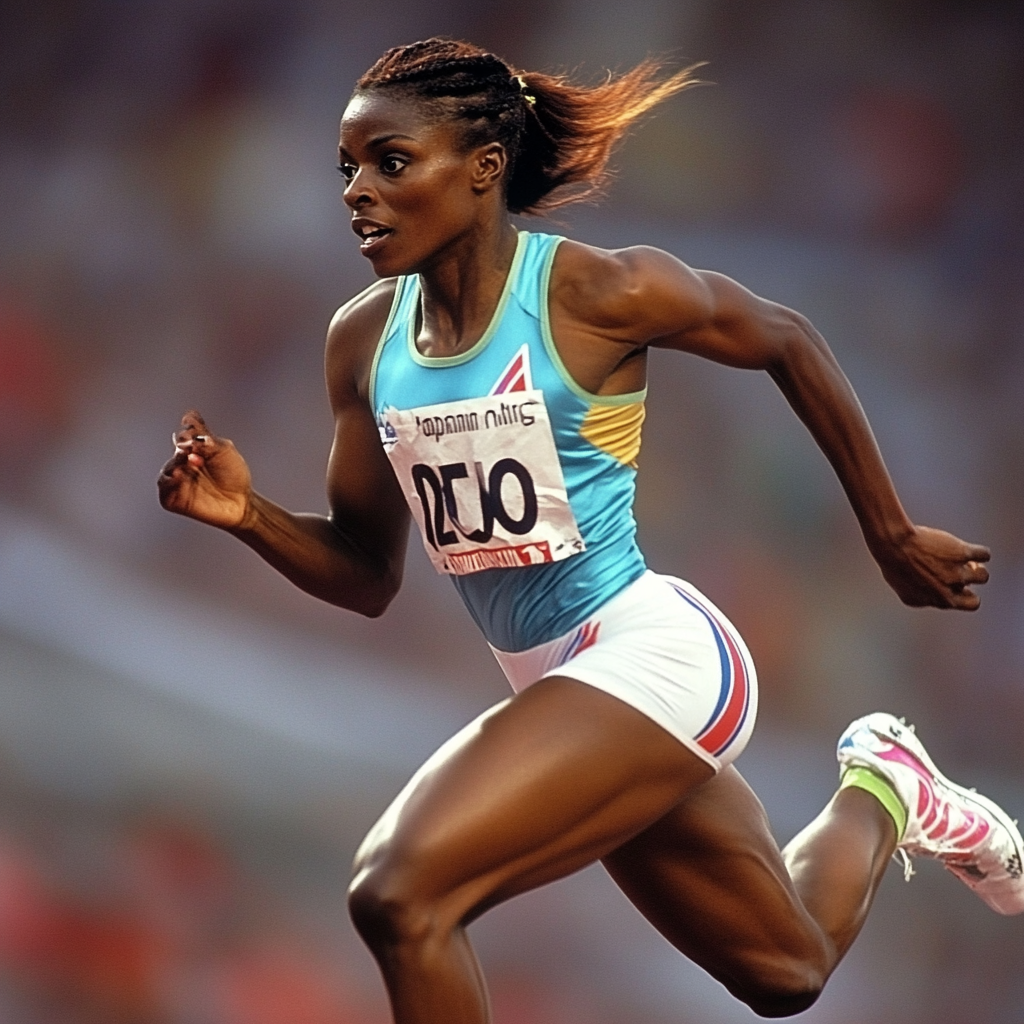
The Paralympic Games: An Exceptional Sporting Event

"The Paralympic Games: Excellence Beyond Limits."
The Paralympic Games are a major international sporting event celebrating the determination, resilience, and talent of athletes with disabilities. Held every four years immediately following the Olympic Games, they bring together thousands of participants from around the world to compete in a wide range of disciplines. Since their inaugural edition in Rome in 1960, the Paralympic Games have evolved into a powerful symbol of inclusion and equality in sports, highlighting the extraordinary abilities of the athletes and inspiring millions of people across the globe.
The History of the Paralympic Games: From Their Inception to Today
The Paralympic Games, a world-class sporting event , have a fascinating history that deserves to be explored. Their creation dates back to a time when sports for people with disabilities were far from a priority. Yet, thanks to the vision and determination of a few pioneers, these games were born and evolved into what they are today. To truly understand the impact of the Paralympic Games, it is essential to look back at their origins and trace their evolution over the decades.
The history of the Paralympic Games begins in 1948, when Sir Ludwig Guttmann, a German-born neurologist, organized a sports competition for World War II veterans with spinal cord injuries. This event, known as the Stoke Mandeville Games, took place in England to coincide with the London Olympic Games. Guttmann's idea was simple yet revolutionary: to use sports as a means of rehabilitation and social integration for people with disabilities. While this first event featured only a handful of participants, it laid the foundation for a movement that would soon gain incredible momentum.
Over the years, the Stoke Mandeville Games grew in popularity and international participation. A major turning point occurred in 1960 when the first official Paralympic Games were held in Rome. This edition brought together 400 athletes from 23 countries, marking the dawn of a new era for Paralympic sports. The Rome Games not only showcased the abilities of athletes with disabilities but also helped shift societal perceptions of disability.
The following decades saw the continued expansion of the Paralympic Games, both in the number of participants and the variety of sports. The 1970s and 1980s were marked by the gradual inclusion of new disability categories and sporting events, reflecting a strong commitment to inclusivity and diversity. This period was also characterized by growing recognition from the International Olympic Committee, which helped elevate the visibility and prestige of the Paralympics.
A crucial milestone was reached in 1988 when the Seoul Paralympic Games were held in the same city and venues as the Olympic Games for the very first time. This symbolic integration bolstered the status of the Paralympics and paved the way for closer collaboration between the two events. Since then, every edition of the Paralympic Games has been staged alongside the Olympics, underscoring the importance of equality and inclusion in sports.
Today, the Paralympic Games are a major global event attracting thousands of athletes from around the world and millions of spectators. They have become a vital platform for promoting the rights of people with disabilities and celebrating human diversity. Technological advancements and sports innovations have also enabled Paralympic athletes to push the boundaries of performance, inspiring entire generations in the process.
In conclusion, the history of the Paralympic Games is a testament to the resilience and determination of people with disabilities worldwide. From their humble beginnings in Stoke Mandeville to their current status as a premier sporting event, the Paralympics continue to transform lives and challenge stereotypes. They remind us that sports are a powerful catalyst for social change and that inclusion is a fundamental value we should all strive toward.
Paralympic Athletes: Portraits of Inspiring Champions
The Paralympic Games are much more than just a sports competition; they are a true tribute to human resilience and the ability to overcome obstacles. The athletes who compete in these games are living examples of courage and determination, and their stories inspire millions around the globe. By exploring the journeys of these champions, we uncover narratives that go far beyond athletic performances, touching on profound aspects of the human condition.
Take the example of Marie-Amélie Le Fur, a French athlete who managed to turn a personal tragedy into an unwavering source of motivation. After losing a leg in a scooter accident, she decided to take up para-athletics. Her determination led her to win multiple gold medals at the Paralympic Games, making her an iconic figure in Paralympic sports. Her story is a powerful reminder that the only true limits are often those we set for ourselves, and that willpower can transcend physical barriers.
Another inspiring example is Tatyana McFadden, an American athlete born with spina bifida and adopted from a Russian orphanage. Despite a difficult start in life, she found an escape and a source of strength in sports. Today, she is one of the most decorated Paralympic athletes in history, with numerous track and field medals to her name. Her journey illustrates how sports can be a vehicle for personal and social transformation, offering a platform to challenge stereotypes and promote inclusion.
The Paralympic Games wouldn't be complete without mentioning athletes like Daniel Dias, a Brazilian swimmer who made history with his outstanding performances. Born with a congenital malformation, he took up swimming at the age of 16 and quickly rose through the ranks to become one of the most successful Paralympic swimmers of all time. His success in the pool reflects rigorous discipline and an unyielding passion for his sport, inspiring countless young people to pursue their dreams despite the challenges they face.
These life stories are not merely tales of sporting success, but also testaments to the human capacity to adapt and thrive in the face of adversity. Paralympic athletes remind us that true sportsmanship lies in perseverance and the ability to get back up after every fall. They embody a life philosophy that champions effort, self-transcendence, and solidarity.
Ultimately, the Paralympic Games are a celebration of diversity and inclusion, spotlighting champions who redefine what it means to be an athlete. Their stories encourage us to rethink our perceptions of human capability and to recognize the strength that lies within each of us. By following their journeys, we are invited to embrace diversity in all its forms and to celebrate the victories, both big and small, that mark our own paths. Paralympic athletes are much more than mere competitors; they are ambassadors of hope and human potential, showing us that regardless of the circumstances, it is always possible to strive for excellence.
Technological Innovations Driving Paralympic Performance
The Paralympic Games are far more than just a sporting competition; they serve as a veritable laboratory for technological innovation. These advancements do more than merely enhance athletic performance—they redefine the limits of what is possible. By exploring the technological breakthroughs transforming the Paralympic Games, we discover a world where science and sport converge to push the boundaries of human excellence.
One of the most striking innovations is undoubtedly the evolution of prosthetics. Modern prosthetics are no longer simple substitutes; they have become extensions of the human body, specifically designed to optimize performance. Thanks to lightweight, durable materials like carbon fiber, these prosthetics enable athletes to run, jump, and even swim with staggering efficiency. Engineers work closely with the athletes to customize each prosthetic, tailoring them to the specific sport and the user's unique needs. This level of customization is crucial, as it unlocks a tier of performance that was unimaginable just a few decades ago.
In parallel, racing wheelchairs have undergone a spectacular transformation. Today's models are the result of cutting-edge engineering, integrating technologies adapted from the aerospace and automotive industries. These chairs are designed to be ultra-lightweight while offering exceptional stability and maneuverability, allowing athletes to focus entirely on their performance without being hindered by their equipment. Furthermore, the introduction of sensors and real-time tracking systems empowers coaches to analyze athletes' movements and fine-tune their techniques.
These innovations are not limited to physical equipment. Advancements in virtual and augmented reality are opening up entirely new training possibilities for Paralympic athletes. These technologies can simulate competition environments, giving athletes the chance to train under realistic conditions without ever leaving their training centers. This is particularly beneficial for winter sports or disciplines that require specialized facilities. Moreover, augmented reality can provide real-time feedback, helping athletes instantly adjust their posture or technique.
The impact of these innovations extends well beyond athletic performance. They also help shift societal perceptions of disability. Seeing Paralympic athletes shatter limits with the help of technology prompts the public to rethink what it means to live with a disability. The Paralympic Games thus serve as a powerful showcase for inclusion and equality, demonstrating that technology can be a vital catalyst for empowerment.
In conclusion, technological innovations play a pivotal role in the evolution of the Paralympic Games. They not only elevate athlete performance but also transform how we view disability. As technology continues to advance, it is fascinating to imagine what new frontiers will be crossed in future editions of the Games. Armed with technological progress, Paralympic athletes will undoubtedly continue to inspire us with their determination and their ability to overcome obstacles.
The Social and Cultural Impact of the Paralympic Games Worldwide
The Paralympic Games are far more than just a sports competition; they are a global phenomenon that transcends borders and cultures. Since their inception, these Games have not only highlighted the extraordinary abilities of athletes with disabilities but have also played a crucial role in transforming social and cultural perceptions worldwide. By exploring the social and cultural impact of the Paralympic Games, we uncover a world where sport becomes a powerful vehicle for change and inclusion.
One of the most remarkable aspects of the Paralympic Games is their ability to change the perception of disability. Historically, individuals with disabilities have often been marginalized and underestimated. However, watching Paralympic athletes push the very limits of human endurance forces the public to reconsider its prejudices. The exceptional performances of these athletes prove that disability is not a limitation, but rather a difference that can be transcended through determination and talent. This growing awareness fosters broader acceptance and greater inclusion of people with disabilities across all facets of society.
Furthermore, the Paralympic Games have a profound impact on popular culture. The inspiring stories of Paralympic athletes capture the public's imagination and are widely broadcast by global media. These tales of courage and resilience resonate deeply in a society hungry for positive role models. Paralympic athletes emerge as iconic figures, not just for individuals with disabilities, but for anyone striving to overcome obstacles in their own lives. This heightened visibility paves the way for a deeper understanding and appreciation of human diversity.
Moreover, the Paralympic Games carry significant economic and political weight. Influenced by hosting this global event, many countries have invested heavily in accessible infrastructure and adopted more inclusive disability policies. These changes extend far beyond sports facilities, branching out into public transportation, buildings, and public spaces to make cities more accessible to everyone. In addition, the commitment of governments and international organizations to supporting the Paralympic Games reflects a growing recognition of the importance of inclusion in driving both social and economic development.
Finally, the impact of the Paralympic Games is highly visible in the field of education. Schools and universities are increasingly integrating Paralympic values into their curricula, thereby educating younger generations on the importance of inclusion and equality. Educational initiatives inspired by the Paralympic Games encourage students to adopt a positive attitude toward disability and to celebrate diversity in all its forms. This early education is essential for building a more inclusive and tolerant society.
In conclusion, the Paralympic Games are much more than a sporting event; they are a catalyst for social and cultural change. By highlighting the capabilities of athletes with disabilities, they transform perceptions, influence policies, and inspire entire generations. Through their lasting impact, the Paralympic Games continue to promote a world where everyone has the opportunity to fulfill their potential, regardless of their differences.
The Various Paralympic Disciplines: An Overview of Adapted Sports
The Paralympic Games are far more than a simple athletic competition; they are a true festival of resilience, determination, and innovation. Exploring the various Paralympic disciplines reveals a world where adaptation and creativity lie at the heart of every event. These disciplines, while often inspired by traditional Olympic sports, are specially designed to meet the needs and abilities of athletes with disabilities. This sporting diversity offers a fascinating glimpse into how sports can be made inclusive and accessible to all.
Let us begin with para-athletics, a discipline that perfectly embodies the spirit of the Paralympic Games. Track and field events are adapted to include races, jumps, and throws, featuring specific categories based on the type and degree of impairment. Athletes often utilize prosthetics or specially designed wheelchairs to maximize their performance. This discipline highlights the speed, strength, and endurance of the participants, while underscoring the vital role of technology in modern sports.
Moving on to aquatic sports, Paralympic swimming is another prime example of how disciplines are adapted. Swimmers are classified according to their impairment, ensuring fair and stimulating competition. These athletes demonstrate incredible agility and refined technique, proving that water is a universal playground. Swimming also provides a platform to raise public awareness about the capabilities of individuals with disabilities, inspiring countless spectators worldwide.
Wheelchair basketball is another discipline that captures attention with its dynamism and intensity. This sport, which demands exceptional coordination and team strategy, is a spectacle in its own right. Players skillfully maneuver their wheelchairs while dribbling, passing, and shooting with impressive precision. Wheelchair basketball perfectly illustrates how team sports can be adapted to include all participants without compromising the thrill of the game.
Continuing our exploration, wheelchair rugby—often dubbed "murderball" due to its sheer intensity—is a reliably captivating discipline. The sport blends elements of rugby, basketball, and handball, and is played on an indoor court. Collisions between wheelchairs are frequent, adding a spectacular dimension to the game. Wheelchair rugby stands as a testament to the strength and determination of athletes who continually push the boundaries of what is possible.
Finally, para-cycling, which features both road and track events, is a discipline that showcases speed and endurance. Cyclists use adapted bicycles, such as tandems for visually impaired athletes or handbikes for those with lower-limb impairments. Para-cycling is a telling example of how technology and human ingenuity can combine to create sporting opportunities for everyone.
In conclusion, the various Paralympic disciplines offer an inspiring glimpse into how sports can be adapted to include all athletes, regardless of their physical abilities. These sports are not merely competitions; they are celebrations of human diversity and the indomitable spirit. The Paralympic Games remind us that sport is a universal language, capable of transcending barriers and bringing people together around a shared passion. The Paralympic Games represent an exceptional sporting event that celebrates the determination, resilience, and talent of athletes with disabilities. They provide a global platform to highlight the extraordinary capabilities of these athletes, all while promoting inclusion and equality in sports. By bringing together participants from diverse backgrounds, the Paralympic Games foster the understanding and acceptance of differences, inspiring millions of people around the world. They are not only an elite competition but also a powerful vehicle for social change, encouraging a more inclusive society that respects diversity.