The Art of Effective Defense in Team Sports
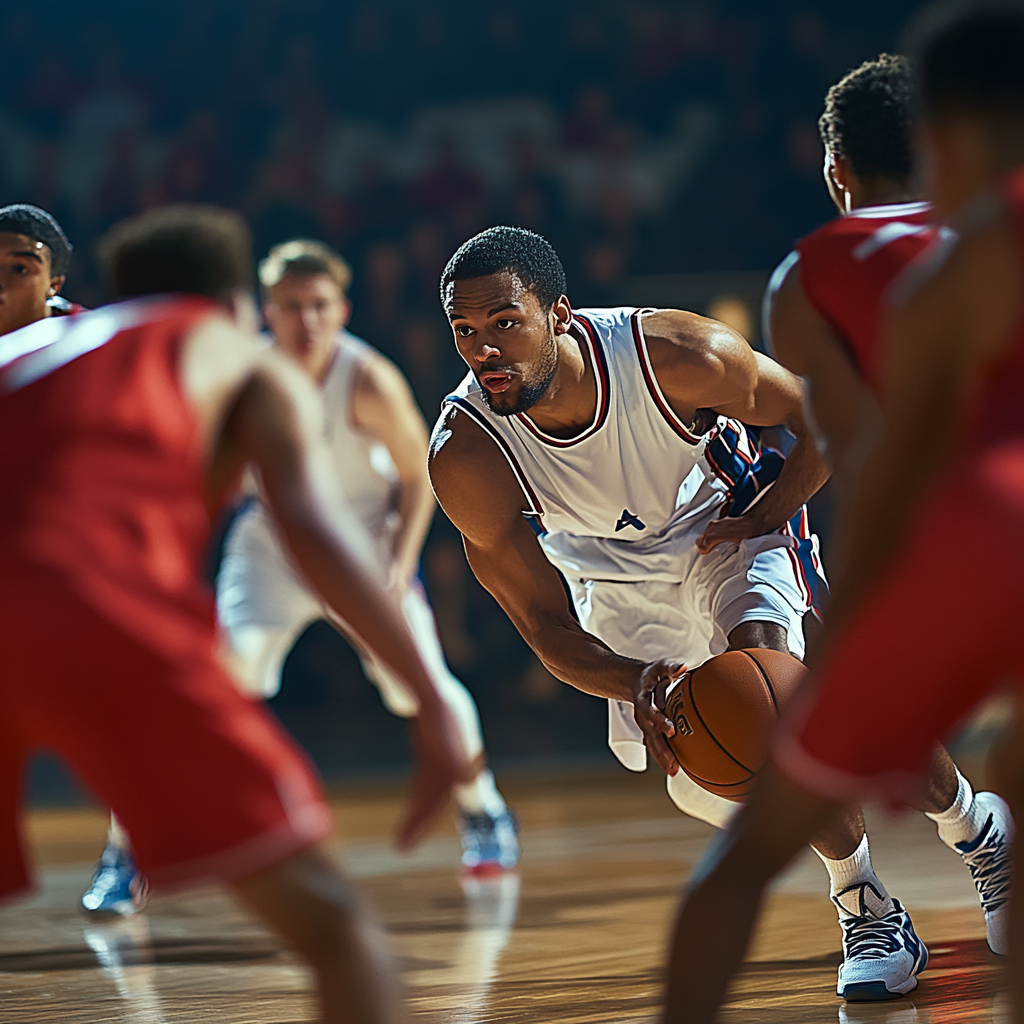
"Collective mastery, invincible defense."
The art of effective defense in team sports relies on a combination of strategy, communication, and individual technique. In team sports, defense is crucial for preventing the opponent from scoring and for creating counter-attack opportunities. A solid defense requires a deep understanding of game tactics, flawless coordination among teammates, and the ability to anticipate the opponent's moves. Players must be able to read the game, react quickly, and adapt to different situations on the field. Furthermore, constant and clear communication between team members is essential to ensure effective coverage and avoid costly mistakes. By mastering these elements, a team can not only protect its own half but also transform its defense into a powerful offensive weapon.
Communication Techniques for a Solid Defense
In the world of team sports, defense is often seen as a thankless task, yet it is essential to the success of any team. A strong defense is built not only on physical and technical skills but also on effective communication between players. On-field communication is an art in itself, and it can mean the difference between a defense that crumbles under pressure and one that stands firm brilliantly. So, how can teams improve their communication to strengthen their defense?
First and foremost, it is crucial to understand that communication is not limited to words. Gestures, visual cues, and even body language play an equally important role. For example, a simple glance or hand gesture can signal a teammate to shift position or cover an opponent. These non-verbal cues must be clear and understood by every team member to avoid confusion. By integrating these elements into practice sessions, players can develop an intuitive understanding of one another, which is essential for a responsive and coordinated defense.
Next, verbal communication remains a fundamental pillar. Players should be encouraged to talk constantly on the field. Short, precise phrases—such as "on your left," "behind you," or "press"—can alert teammates to an imminent threat or an opportunity to seize. However, for this communication to be effective, it must be concise and relevant. Too much information can overwhelm players, while a lack of communication can leave gaping holes in the defense.
Trust among players is also a key element for successful communication. When players trust each other, they are more likely to listen and react to their teammates' instructions. This trust is built over time through regular practice and shared experiences on the pitch. By cultivating an environment where every player feels valued and heard, the team can strengthen its bonds and improve its defensive cohesion.
Furthermore, it is important to remember that communication doesn't stop when the game ends. Post-match debriefings are valuable opportunities to discuss what worked well and what could be improved. These open discussions allow players to share their perspectives and learn from one another. By identifying communication breakdowns and finding solutions together, the team can grow and prepare for future challenges.
Finally, adaptability is an essential quality for any defense. Game situations evolve rapidly, and teams must be able to adjust in real time. Effective communication allows players to adapt to the opponent's tactical shifts and react accordingly. By staying flexible and maintaining constant communication, teams can transform a vulnerable defense into an impenetrable fortress.
Ultimately, communication is the glue that holds the elements of a solid defense together. By combining clear non-verbal cues, concise verbal communication, mutual trust, constructive debriefings, and constant adaptability, teams can fortify their defense and boost their chances of success. In team sports, as in life, the key often lies in how we communicate and collaborate with those around us.
The Importance of Team Cohesion in Defense
In the realm of team sports, defending is frequently viewed as a thankless job, yet it is actually one of the foundational pillars for any team aspiring to win. Defense is about more than just stopping the opponent from scoring; it is an intricate dance that requires flawless coordination and mutual understanding between players. This is where team cohesion comes into play, transforming a group of individuals into a formidable defensive unit.
Defensive team cohesion begins with effective communication. Players must be able to talk to one another, understand each other, and react swiftly to both verbal and non-verbal cues. This communication goes beyond words; it includes gestures, eye contact, and even the instinct developed from time spent together on the field. A team that communicates well can adjust in real time, cover open spaces, and react to the opponent's moves with impressive fluidity.
However, communication is just the first step. Mutual trust is equally vital. Every player must trust their teammates to do their part of the job. This trust allows players to focus on their own role without constantly worrying about what the others are doing. It creates an environment where everyone feels responsible not just for their own performance, but for that of the team as a whole. This shared accountability is what enables a team to bond and function as a single entity.
Furthermore, defensive team cohesion is reinforced by a shared understanding of strategies and goals. Successful teams are those that have spent time developing and practicing clear game plans. These strategies must be understood and embraced by all team members, requiring open discussions and a willingness to adapt. When a team is on the same page, it can anticipate the opponent's actions and react in a coordinated manner, making the defense far more effective.
Team cohesion isn't built overnight. It is the result of hard work, countless hours of practice, and a collective desire to improve. Teams that invest in building this cohesion often reap the rewards of their efforts through solid defensive performances and on-field success. Moreover, this cohesion has a ripple effect across the entire squad, enhancing not only the defense but also the offense and the transition between the two.
Ultimately, defensive team cohesion is much more than a mere strategy; it’s a state of mind. It requires each player to set aside personal ambition for the greater good of the squad. It’s the willingness to work together, support one another, and fight for a common goal. In team sports, much like in life, true strength lies in unity. A team that defends together, wins together. And therein lies the true beauty of the art of effective defense in team sports.
Positioning Strategies for a Relentless Defense
In the world of team sports, defense is often viewed as a thankless job. In reality, however, it is a subtle art that requires a deep understanding of game dynamics. To build a relentless defense, mastering positioning strategies is essential. These strategies go far beyond simply scattering players across the field; they involve meticulous coordination and the ability to anticipate the opponent's moves. Indeed, defensive positioning is the cornerstone of any team striving to neutralize rival attacks while setting up highly effective counter-attacks.
One of the first steps in establishing a solid defense is understanding each player's role within the defensive scheme. Every team member must be keenly aware of their specific position and responsibilities. In soccer, for example, center-backs must not only block opposing forwards but also direct the defensive line and communicate with midfielders to ensure adequate coverage. This communication is crucial, as it keeps the defensive structure cohesive even when the team is under heavy pressure.
Furthermore, anticipation is a key skill for effective defensive positioning. Defenders must be able to read the game and predict their opponents' actions. This requires close observation and a solid understanding of the opposing team's tactical playbook. In basketball, for instance, a defender who anticipates a pass can intercept the ball and spark a fast break. This ability to foresee the opposition's moves can mean the difference between a defense that merely reacts and one that dictates the pace of the game.
Flexibility is another essential element of a relentless defense. Teams must be ready to adjust their positioning based on the flow of the match. This might mean switching from a zone defense to man-to-man coverage, or adopting a more aggressive approach to disrupt the opponent's rhythm. Such adaptability demands a thorough grasp of various defensive strategies and the ability to execute them swiftly and effectively.
Another crucial aspect of defensive positioning is spatial management. Defenders must be hyper-aware of the space they concede to their opponents, ensuring they don't open up avenues for dangerous attacks. This involves maintaining the proper distance between players and making sure passing lanes are well-covered. In team handball, for example, a well-positioned defense can force the opposition to take difficult outside shots, thereby drastically reducing their scoring chances.
Finally, it is important to emphasize that defensive positioning does not rely solely on individual skills, but rather on collective synergy. A team that works together in harmony can create an almost impenetrable defense. This requires regular practice and mutual understanding among players. Ultimately, a relentless defense is the result of a combination of strategy, communication, and teamwork.
In conclusion, defensive positioning is an art that demands constant attention to detail and a willingness to learn and adapt. By mastering these strategies, teams can not only shore up their defense but also transform their overall game into a formidable force on the field.
Video Analysis: Improving Defense Through Visual Feedback
In the world of team sports, defense is often seen as a daunting yet crucial task. It requires flawless coordination, seamless communication, and a profound understanding of the opponent's strategies. However, with technological advancements, a new method has emerged to perfect this art: video analysis. This innovative approach provides teams with a visual perspective that can completely transform how they defend. By diving into the world of film study, we discover how visual feedback can become a major asset in defensive improvement.
Video analysis allows teams to review their past performances, offering a unique opportunity to see exactly what worked and what didn't. By watching the tape, players can pinpoint their mistakes, whether it's poor positioning, a breakdown in communication, or a delayed reaction to an incoming attack. This visual introspection is vital because it turns errors into valuable lessons. Moreover, it provides an objective viewpoint—something that is often hard to grasp in the heat of the moment when adrenaline and the pressure of the game take over.
Beyond simply evaluating mistakes, video analysis is a powerful tool for highlighting defensive successes. By observing moments when the defense held strong, teams can reinforce those strategies and integrate them more deeply into their playbook. This creates a cycle of continuous improvement, where strengths are solidified and weaknesses are corrected. Such a proactive approach is essential for any squad looking to excel defensively.
Another advantage of video analysis is its ability to break down opposing strategies. By studying footage of rival teams, defenders can anticipate their opponents' movements and tactics. This provides a strategic edge, allowing players to mentally and physically prepare to counter incoming attacks. Such anticipation is often the key to a successful defense, as it enables quick and effective reactions to unpredictable situations.
Furthermore, video analysis fosters better communication within the team. By watching film together, players and coaches can discuss which strategies to adopt, what adjustments are needed, and everyone's specific role on the field. This collaboration strengthens team cohesion, a fundamental element of a solid defense. When they share a common vision, players are much more likely to work together to achieve their defensive goals.
Finally, integrating video analysis into defensive training can have a highly positive psychological impact on the players. By seeing their own progress and gaining a deeper understanding of game dynamics, they build confidence. This increased self-assurance often translates to improved on-field performance, as players become more certain of their abilities and decision-making.
Ultimately, video analysis is an invaluable tool for any team looking to improve its defense. It provides a unique perspective that allows players to learn from mistakes, build on successes, anticipate opposing strategies, and foster better communication. By adopting this approach, teams can transform their defense into a formidable force, ready to take on any challenge. The art of effective defending in team sports is thus enhanced by the power of visual feedback, paving the way for new possibilities and a promising future.
The Impact of Physical Conditioning on Defensive Performance
In the world of team sports, defending is often seen as a thankless task, yet it is essential to the success of any squad. The art of effective defending relies on more than just strategy or technique; it is also deeply influenced by the players' physical conditioning. In fact, defensive performance is closely tied to an athlete's physical ability to maintain a high level of intensity throughout the game. This raises an intriguing question: how exactly does fitness impact defensive performance?
To begin with, it is important to understand that defense requires a combination of speed, stamina, strength, and agility. These elements are crucial for reacting quickly to an opponent's movements, covering large distances on the field, and withstanding physical contact. For instance, a soccer defender must be able to sprint to catch up with an attacker, while possessing the strength needed to challenge for the ball. Thus, solid physical fitness not only allows players to execute these actions effectively but also to repeat them throughout the match without showing signs of fatigue.
Furthermore, endurance plays a key role in defensive performance. A player lacking stamina may experience a drop in concentration as the game progresses, which can lead to costly mistakes. Physical fatigue often translates into mental fatigue, making players more likely to lose their positioning or miss crucial interceptions. Consequently, a training program focused on improving endurance can have a significant impact on a team's ability to defend effectively.
Speed and agility are also essential components of physical fitness that influence defense. The ability to change direction quickly and accelerate in an instant is crucial for tracking the unpredictable movements of opposing attackers. Plyometric and sprint drills are often incorporated into training regimens to enhance these skills. By developing these attributes, players can not only react faster but also anticipate their opponents' actions, which is a major asset for any defensive unit.
However, the importance of recovery in maintaining peak physical condition should not be overlooked. Team sports place considerable stress on the body, and proper recovery is vital to prevent injuries and sustain a high level of performance. Recovery techniques, such as stretching, massages, and hydration, play a critical role in preparing players for the defensive challenges ahead.
Ultimately, physical conditioning is a fundamental pillar of defensive performance in team sports. It allows players to maintain their intensity, stay focused, and react quickly to opposing actions. By investing in comprehensive physical training and paying close attention to recovery, teams can bolster their defense and increase their chances of success. So, the next time you watch a game, take a moment to appreciate not just the strategy and technique, but also the physical conditioning that underpins every defensive move. The art of effective defending in team sports relies on several key elements that, when combined, create a solid and resilient defense. First and foremost, communication is essential; players must constantly exchange information to anticipate opponents' movements and adjust their positioning. Next, tactical awareness is crucial, as it enables defenders to read the game, understand the opponent's intentions, and react accordingly. Discipline and rigor are also necessary to maintain a cohesive defensive structure and avoid individual errors that opponents could exploit. Additionally, physical fitness plays a significant role, empowering players to sustain a high level of intensity throughout the match. Finally, adaptability is an invaluable quality, allowing the team to adjust to the various offensive strategies they encounter. In conclusion, effective defending in team sports is the result of a harmonious blend of communication, tactical awareness, discipline, fitness, and adaptability, ultimately neutralizing opposing attacks and contributing to the team's success.


